Last Updated: November 6, 2026
Quick Summary
Baby skincare means cleansing, moisturising and protecting an infant’s thinner, more permeable skin with products made for it. Keep the routine short: a mild cleanser, a fragrance-free moisturiser, sensitive wipes and a plain barrier ointment, then patch test anything new for 24 hours before wider use.
- A newborn essentials kit is four items: mild cleanser, fragrance-free moisturiser, sensitive wipes and barrier ointment.
- Ingredients are listed by weight, so the first few names show what the product mostly contains.
- Choose fragrance-free over unscented, since unscented products may still contain masking parfum.
- Apply moisturiser within a few minutes of a bath to lock in hydration and support the barrier.
- See a doctor for spreading rash, weeping or crusting, fever with rash, or swelling.
Not sure which baby skincare to start with?Shop MoH-licensed baby cleansers, moisturisers and wipes with delivery in 2-3 working days.
Table of Contents
- Start With the Skin Barrier, Not the Shelf
- Newborn Skincare Essentials You Actually Need
- How to Read Baby Skincare Labels Without Guesswork
- Baby Skincare Ingredients to Avoid and Why
- Choosing a Baby Moisturiser for Dry Skin
- Bathing and Cleansing: The Step Most Parents Get Wrong
- How to Patch Test a New Product and Respond to a Reaction
- What Safety Claims and Certifications Really Mean
- When a Skin Concern Needs Professional Care
- Building Your Baby Skincare Order With Confidence
- Frequently Asked Questions
Start With the Skin Barrier, Not the Shelf
Baby skincare is the practice of cleansing, moisturising and protecting an infant’s skin with products formulated for its thinner, more permeable surface. This guide starts where most shopping trips should: with the barrier itself, not the packaging.
A newborn’s skin is not a smaller version of an adult’s. It loses water faster, absorbs more of what sits on it, and reacts to irritants with visible redness far sooner. That single fact reshapes every buying decision you will make.
Below, we walk through what you actually need, how to read a label without guesswork, which ingredients to leave on the shelf, and how to test anything new before it touches your baby’s whole body. The aim is fewer products, chosen better.
Newborn Skincare Essentials You Actually Need
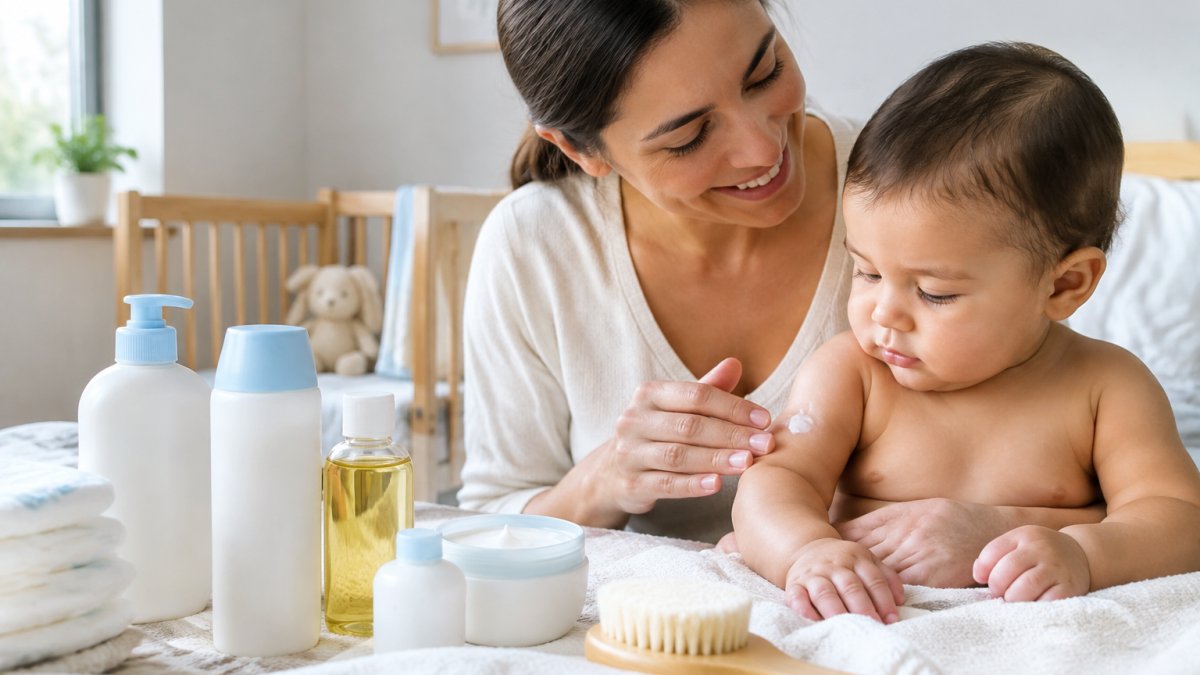
A newborn skincare essentials kit is short: a mild cleanser, a fragrance-free moisturiser, wipes for sensitive skin, and a plain barrier ointment. Everything else is optional.
Start with these four and add only when a specific need appears:
- A gentle, soap-free wash for bath time
- A fragrance-free moisturiser for daily use
- Soft, low-ingredient wipes for nappy changes
- A simple barrier ointment for the nappy area
For wipes, Pigeon K841 Baby Wipes Moist 70 Sheets is a practical pick for sensitive skin because the sheet stays soft and wet without heavy scent. Resist the urge to buy a full shelf before you know what your baby’s skin tolerates.
How to Read Baby Skincare Labels Without Guesswork
Reading a baby skincare label means scanning the ingredient list in order, checking for fragrance and dye, and matching the product to your baby’s age and skin condition. The front of the bottle is marketing; the back is the truth.
Here is a simple order of operations:
- Read the ingredient list, not the front claims.
- Check where fragrance appears; earlier means more of it.
- Look for “fragrance-free” rather than “unscented.”
- Confirm the product suits your baby’s age band.
- Note the batch and expiry before first use.
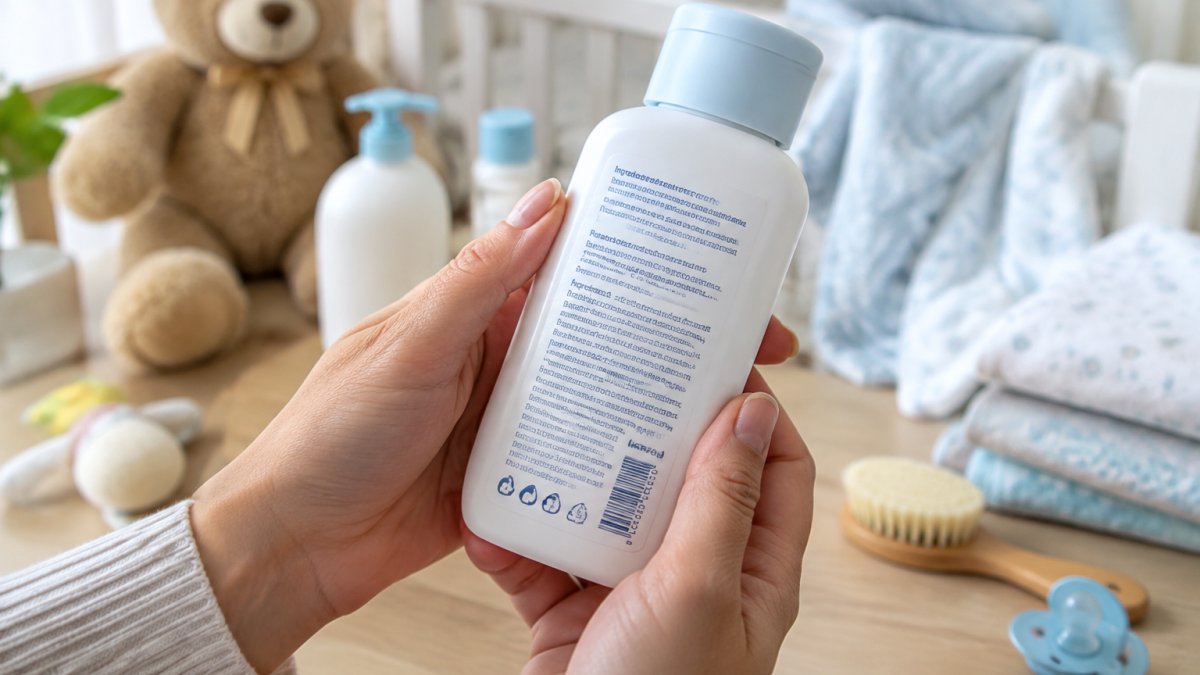
A common mistake is trusting a “gentle” badge on the front while ignoring a long ingredient list behind it.
Ingredient order is a concentration map. Ingredients are generally listed by weight, so the first few names give a good sense of what the product mostly contains. If water (aqua) leads, the product is mostly water, normal for lotions and washes. If a botanical oil or butter sits in the top three, the formula is richer and may suit dry patches but can feel heavy on newborn skin. Anything after the 1% mark can appear in any order, which is why preservatives and fragrance often cluster at the end even when they matter.
Learn the INCI names that matter. Labels use International Nomenclature of Cosmetic Ingredients (INCI) names, not plain English. “Parfum” and “fragrance” are the same declaration. “Sodium lauryl sulfate” is the harsh surfactant; “sodium cocoyl isethionate” and “coco-glucoside” are milder alternatives. “Alcohol denat.” and “ethanol” are drying; “cetyl alcohol” and “stearyl alcohol” are fatty alcohols that actually moisturise. Knowing this stops you from avoiding the wrong “alcohol.”
“Fragrance-free” versus “unscented” is not wordplay. Fragrance-free means no added perfume. Unscented can mean the product contains a masking fragrance to neutralise the smell of raw ingredients, so an unscented product may still contain parfum. For a baby with reactive skin, fragrance-free is the safer declaration.
Check the age band and the batch code. Many formulas are labelled for newborns, 0-6 months, or 6 months+, and the preservative system may differ between them. Before first use, note the batch number and expiry: opened products degrade, and a cream that has sat in a warm bathroom for months is not the same product you bought.
Watch out: a long list of botanical extracts reads as “natural” but each extract is another potential contact trigger, so a shorter, plainer formula is often the more predictable choice for a newborn.
Baby Skincare Ingredients to Avoid and Why
The baby skincare ingredients to avoid are fragrance, dyes, harsh soaps, drying alcohols, and strong essential oils. Each one either strips the skin barrier or adds a needless trigger for sensitive skin.
Watch for these on the label:
- Fragrance and perfume: the most common cause of contact reactions in infants
- Synthetic dyes: added for colour, never for the skin
- Sodium lauryl sulfate: a strong surfactant that can leave skin tight
- Drying alcohols: listed early, they pull moisture from the barrier
- Parabens and phthalates: preservative and texture agents many parents choose to skip
This is not about fear. It is about removing variables. A short, fragrance-free formula makes it far easier to tell what caused a reaction when one appears.
Why fragrance tops the list. Fragrance mixes can contain dozens of undeclared compounds, and “parfum” on a label does not tell you which ones. Fragrance is widely cited as a common cause of contact reactions, which is why fragrance-free formulas are the simpler choice for sensitive skin. The practical rule: if “parfum” or “fragrance” appears anywhere, treat the product as scented regardless of the front label.
Surfactants: the difference between cleansing and stripping. Sodium lauryl sulfate (SLS) is an effective foaming agent but binds to skin lipids and can leave the barrier tight and reactive. Milder surfactants, sodium cocoyl isethionate, coco-glucoside, and decyl glucoside, clean without the same lipid disruption. A wash that does not foam heavily is not failing; foam is a cosmetic expectation, not a cleansing requirement.
Alcohols are not one category. “Alcohol denat.” and ethanol are volatile and drying, especially when listed early. Cetyl, stearyl, and cetearyl alcohol are fatty alcohols used as emollients and thickeners, they are part of the moisturising system, not a reason to reject a product. Reading the specific INCI name prevents a common false alarm.
Essential oils are botanicals, not automatically gentle. Essential oils are botanicals and are not automatically gentle on infant skin. “Natural” and “plant-based” do not mean low-risk; a fragrance-free formula avoids the question entirely.
Preservatives: the trade-off nobody explains. Parabens and phthalates are the names parents most often avoid, but a product with no preservative system is a microbial risk, particularly for a cream used around the nappy area. The goal is not a preservative-free product but a well-preserved one with a short, declared ingredient list. If a label claims “preservative-free” on a water-based product, check how it is packaged and how long it stays usable after opening.
Watch out: an “all-natural” cream with several botanical oils and no declared preservative can support microbial growth once opened, so match the claim against the packaging and the expiry date rather than the front of the bottle.
Choosing a Baby Moisturiser for Dry Skin
A baby moisturiser for dry skin should be fragrance-free, dye-free and rich enough to hold moisture through the night. Thicker creams and ointments suit very dry patches; light lotions suit daily all-over use.
Match the texture to the need:
- Lotion: everyday hydration for normal to mildly dry skin
- Cream: moderate dryness, applied after bathing
- Ointment: stubborn patches and the nappy area
Ego Qv Baby Moisturising Cream 250ml With Pump, a fragrance-free cream for dry skin, and Aveeno Baby Daily Care Moisturizing Lotion 150 Ml, a lighter daily lotion. Apply within a few minutes of a bath to lock in hydration and support barrier protection.
Bathing and Cleansing: The Step Most Parents Get Wrong
Bathing a baby correctly means short, lukewarm baths with a mild, soap-free cleanser, and moisturiser applied straight after. Most parents overwash and under-moisturise.
Keep it simple:
- Use lukewarm water, not hot.
- Keep baths brief, a few times a week for newborns.
- Use a small amount of soap-free cleanser.
- Pat dry gently, then moisturise while skin is still damp.
For cleansing, Helenvita Baby All Over Cleanser 300ml covers hair and body in one step, while Shea Moisture Raw Shea Chamomile Argan Oil Baby Wash Shampoo 13 Oz suits parents who prefer a combined wash and shampoo. Watch out: daily hot baths with foaming soap are the quickest way to dry out newborn skin.
How to Patch Test a New Product and Respond to a Reaction
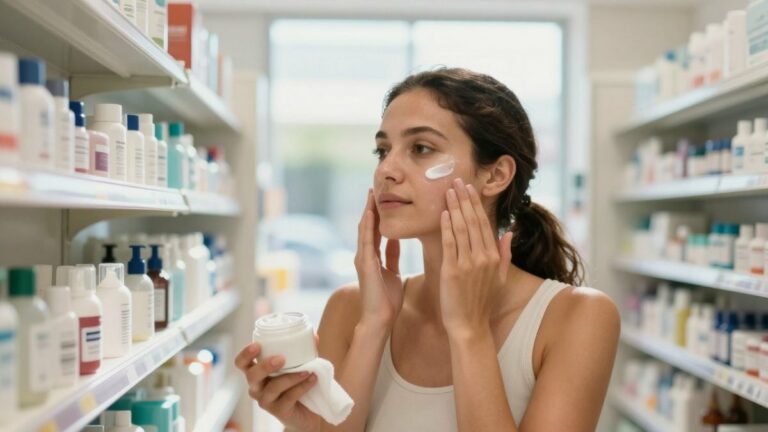
A patch test means applying a small amount of a new product to a small area of skin and waiting to see how it responds before wider use. It is the single most useful habit in baby skincare.
Do it this way:
- Apply a small amount behind the ear or on the inner forearm.
- Wait 24 hours and check for redness, swelling or itching.
- If clear, repeat on a small patch and wait another day.
- Only then use it more widely.
If a reaction appears, stop the product, rinse with lukewarm water, and note the ingredient list. Persistent or spreading irritation needs a clinician, not another product.
What Safety Claims and Certifications Really Mean
Safety claims are only as useful as the standard behind them. “Hypoallergenic” and “dermatologist-tested” describe testing intent, not a guarantee, so read them as signals rather than promises.
A practical way to weigh claims:
| Claim | What it signals | What to check |
|---|---|---|
| Fragrance-free | No added perfume | Ingredient list confirms |
| Hypoallergenic | Formulated to reduce allergy risk | No formal standard |
| Dermatologist-tested | Tested under dermatological supervision | Who tested, and how |
| Tear-free | Lower irritation near eyes | Still avoid direct eye contact |
| Paediatrician-approved | Reviewed by a clinician | Often a marketing label |
Treat certifications as one input, not the whole decision. The ingredient list and a patch test tell you more about your own baby than any badge.
When a Skin Concern Needs Professional Care
Some skin concerns need a clinician rather than another product. See a doctor if you notice spreading rash, weeping or crusting, fever alongside a rash, or irritation that worsens despite gentle care.
Watch for these signs:
- A rash that spreads quickly or blisters
- Skin that oozes, crusts or looks infected
- Persistent dryness that no moisturiser improves
- Any reaction with swelling or difficulty breathing
For everyday sensitivity, official guidance on caring for your baby’s skin is a sensible reference point. When in doubt, a pharmacist or paediatrician can assess far faster than trial and error.
Building Your Baby Skincare Order With Confidence
Choosing baby skincare products comes down to a short, fragrance-free routine, a patch test before anything new, and a willingness to remove products rather than add them. Fewer, better-chosen items protect the barrier more reliably than a crowded shelf.
At Saha Jamal, we stock MoH-licensed baby care, with a flat AED 15 shipping charge, delivery in 2-3 working days, and 100% secured payments.
Start with the essentials, test one product at a time, and let your baby’s skin guide the rest. Get started with Saha Jamal and build a gentle baby skincare routine you can restock with confidence.
Frequently Asked Questions
What skincare products does a newborn actually need?
A newborn needs very little: a mild, soap-free cleanser, a plain moisturiser, and a nappy cream. Bath water should be lukewarm, and plain water works for most washes in the first weeks. Add a baby moisturiser for dry skin only when you notice flaking or roughness. Skip oils, powders, and multi-step routines unless a doctor recommends them. Keeping the routine short makes it easier to spot which product caused any irritation and reduces the number of ingredients touching newborn skin.
How do I choose baby skincare products for a baby with sensitive skin?
Start with fragrance-free, dye-free products that list few ingredients. Look for a mild cleanser and a plain emollient rather than scented lotions. Patch test any new product on a small area of the inner arm or behind the ear for 24 to 48 hours before using it on the face or body. If your baby has a known diagnosis such as eczema, ask a doctor or pharmacist which emollient suits their skin. Keep a short list of products that have worked and avoid switching brands often.
Which ingredients should I avoid in baby skincare products?
Avoid added fragrance and essential oils, which are common causes of skin irritation in babies. Skip dyes, alcohol-based gels, and strong surfactants such as sodium lauryl sulfate in leave-on products. Be cautious with parabens and phthalates, not because every product containing them is unsafe, but because simpler formulas reduce exposure. Antibacterial soaps and products with salicylic acid or high-strength exfoliants are not for infant skin. When in doubt, choose the product with the shorter ingredient list.
Are fragrance-free products better for babies?
Fragrance-free products are the safer default for newborn and sensitive skin. Fragrance is one of the most common causes of contact irritation, and it adds no benefit to the skin. Note that unscented and fragrance-free are not the same: unscented products may contain masking fragrance. Check the ingredient list for the word parfum or fragrance. If you want a scented product for an older child, test it on a small area first and stop if redness or dryness appears.
Should I patch test a new skincare product on my baby?
Yes, patch testing is worth the extra day. Apply a small amount to the inner forearm or behind the ear, leave it uncovered, and check the area after 24 and 48 hours. Redness, itching, or small bumps mean the product is not suitable. Do not test on broken or irritated skin, and test one new product at a time so you know which one caused a reaction. If a reaction spreads or your baby seems unwell, stop using the product and speak to a doctor.
When should I ask a doctor about my baby’s skin reaction?
Ask a doctor if a rash spreads quickly, blisters, weeps, or looks infected, or if your baby has a fever or seems unwell. Persistent dryness or itching that does not improve with a plain moisturiser also deserves a review. Seek urgent care for swelling of the face or lips, difficulty breathing, or a rash that appears suddenly after a new product or food. For mild redness that settles after stopping a product, you can usually manage at home and mention it at the next routine visit.