
Last Updated: November 8, 2026
Quick Summary
The best skincare for sensitive skin in the UAE centres on short, fragrance-free formulas that protect a compromised barrier against heat, air conditioning and harsh surfactants. Build a routine around one mild gel cleanser, one hydrating essence and one repair cream, and introduce each new product alone for three to four days.
- Cleansing is the step most people get wrong, so choose a mild gel cleanser that rinses without a squeaky finish.
- Apply essence to damp skin after cleansing, then seal it with a richer repair cream at night.
- Use a soothing mask twice weekly at most, since more than that risks overload on reactive skin.
- Patch test on the inner forearm or behind the ear for 24 to 48 hours before using on your face.
- Avoid added fragrance, essential oils and denatured alcohol high on the ingredient list.
Which sensitive skin product suits you?Browse MoH-licensed cleansers, essences and creams with flat AED 15 delivery across the UAE.
Table of Contents
- How We Chose the Best Skincare for Sensitive Skin in the UAE
- Quick Comparison: Sensitive Skin Products at a Glance
- 1. Haruharu Wonder Black Rice Soft Cleansing Gel
- 2. Aestura Atobarrier365 Hydro Essence
- 3. COSRX Advanced Snail 96 Mucin Power Essence
- 4. Clinique Daily Calm Soothing Repair Cream
- 5. Dieux Skin Mercy Recovery Cream
- 6. Eucerin Fragrance Free Eczema Relief Cream
- Building a Sensitive Skin Skincare Routine for UAE Weather
- Ingredients to Avoid for Sensitive Skin
- How to Patch Test Skincare Products Safely
- Sensitive Skin vs Specific Skin Conditions
- Where to Buy Sensitive Skin Products in the UAE
- Frequently Asked Questions
How We Chose the Best Skincare for Sensitive Skin in the UAE
Finding the best skincare for sensitive skin in the UAE starts with one hard truth: most “gentle” products are not gentle enough for a compromised skin barrier.
Sensitive skin is a reaction pattern where the barrier responds to heat, dryness, harsh surfactants or fragrance with tightness, redness and flaking. It is not a medical diagnosis, and it can overlap with eczema or rosacea, which need a doctor’s input.
Below, we explain how we screened each product, what it suits, and where it falls short. Prices vary by retailer and pack size, so we point you to current listings rather than quoting figures.
Selection Criteria: What Earned a Place on This List
Products were judged against a set of criteria: the formula avoids or minimises common irritants such as added fragrance and drying alcohol; the texture suits the local climate; it has a clear role in a routine rather than a vague “all-in-one” claim; and it has enough independent recognition or a well-documented ingredient list to judge fairly.
We did not rank by marketing budget or treat brand claims as tested facts. Where a full ingredient list was unavailable, we say so.
Quick Comparison: Sensitive Skin Products at a Glance
Here is the short version. Match the product to your main concern, then read the full entry for the trade-offs.
| Product | Format | Best For | Standout Quality | Watch Out For |
|---|---|---|---|---|
| Haruharu Wonder Black Rice Soft Cleansing Gel | Gel cleanser | Daily cleansing without tightness | Described as a mild cleanser by stockists | Not a makeup remover on its own |
| Aestura Atobarrier365 Hydro Essence | Essence | Layering hydration | Named in a sensitive-skin award roundup | Full ingredient list not verified here |
| COSRX Advanced Snail 96 Mucin Power Essence | Essence | Calming and moisture retention | High mucin concentration in the name | Texture is slippery, not for everyone |
| Clinique Daily Calm Soothing Repair Cream | Cream | Soothing redness and tightness | Range described as catering to sensitive skin | Richer finish in humid weather |
| Dieux Skin Mercy Recovery Cream | Cream | Barrier recovery | Recognised in a sensitive-skin award list | UAE stock varies by retailer |
| Eucerin Fragrance Free Eczema Relief Cream | Cream | Eczema-prone, flaking skin | Fragrance-free by name | Not a substitute for medical treatment |
If you want to see a fragrance-free hydrating option up close while you compare, you can view a fragrance-free sensitive skin moisturiser in our range.
1. Haruharu Wonder Black Rice Soft Cleansing Gel
Cleansing is the step most people get wrong. Foaming cleansers with strong surfactants strip the barrier, leaving skin tight two minutes after washing.
The gel spreads easily and rinses without a squeaky finish, which is the signal you want. Rice-derived ingredients are common in Korean skincare for their soothing, softening properties.
Where it falls short: it is a second cleanse, not a first. If you wear sunscreen or makeup, use a separate oil or balm cleanser first.
Best for: daily use on normal-to-dry sensitive skin.
Skip if: you need a single product that removes sunscreen and makeup.
2. Aestura Atobarrier365 Hydro Essence
Essences are the most underrated step for sensitive skin, and
An essence is a lightweight, watery layer applied after cleansing and before moisturiser to add hydration without occlusives, making it a good fit for humid daytime months when a heavy cream feels like too much but skin still feels tight.
Check the label in store or on the product page for the full ingredient list and pack size before you commit.
Best for: layering hydration under a moisturiser.
Skip if: you want a single-step product and nothing else.
3. COSRX Advanced Snail 96 Mucin Power Essence
Some formulas earn their reputation through a single well-documented ingredient. COSRX Advanced Snail 96 Mucin Power Essence is named for its headline ingredient: 96% snail mucin filtrate.
Snail mucin is used in Korean skincare for its film-forming, moisture-retaining feel.
The trade-off is texture. If you are focused specifically on calming redness and repair, a targeted soothing serum such as Hydropeptide Soothing Serum Redness Repair Relief may suit you better as a companion step.
Best for: calming and moisture retention in a light layer.
Skip if: you dislike gel-like textures or want a cream finish.
4. Clinique Daily Calm Soothing Repair Cream
Creams do the heavy lifting for sensitive skin at night, and The Soothing Repair Cream sits at the richer end, suiting air-conditioned bedrooms and dry indoor climates where skin loses moisture overnight.
A repair cream is a leave-on moisturiser formulated to support the skin barrier and reduce tightness and roughness. Apply it last at night, and use a thinner layer in the morning if humidity is high.
One practical note: the eye area is thinner and reacts faster than the rest of the face, so a dedicated product helps. If you are addressing sensitive skin around the eyes, an option like Avene Soothing Eye Contour Cream is worth considering alongside this cream.
Best for: nighttime soothing and barrier support.
Skip if: you have oily sensitive skin and prefer gels.
5. Dieux Skin Mercy Recovery Cream
Recovery creams are designed for skin that is already irritated, not just prone to it.
The logic is simple: fewer actives, more barrier-supporting emollients, and a texture that does not sting on application, sensible after a reaction, after travel, or during a seasonal change when skin suddenly feels reactive.
Check the full formulation, pack size and UAE stock against the label before buying, and treat this as a candidate rather than a guaranteed fix. If your skin is flaking and itchy rather than just reactive, see the next entry.
6. Eucerin Fragrance Free Eczema Relief Cream
Eczema-prone skin needs a different conversation from general sensitivity. This cream is fragrance-free by name, and fragrance is one of the most common triggers for reactive skin, so removing it is a meaningful first step.
Where it fits: flaking, rough, itchy patches on the body and face that flare in dry indoor air.
A clear boundary: this is a cosmetic moisturiser, not a treatment for a diagnosed skin condition. And if you are comparing emollients for eczema-prone skin, Aveeno Dermexa Soothing Emollient Cream is a reasonable alternative to weigh against it.
Best for: fragrance-sensitive, flaking, eczema-prone skin.
Skip if: you need medical treatment for an active flare.
Building a Sensitive Skin Skincare Routine for UAE Weather
A sensitive skin skincare routine here has to solve two opposite problems in the same day: outdoor heat and humidity push you toward lightweight layers, while air-conditioned interiors pull moisture out and leave skin tight by mid-afternoon. Most generic routines ignore that split, which is why they fail.
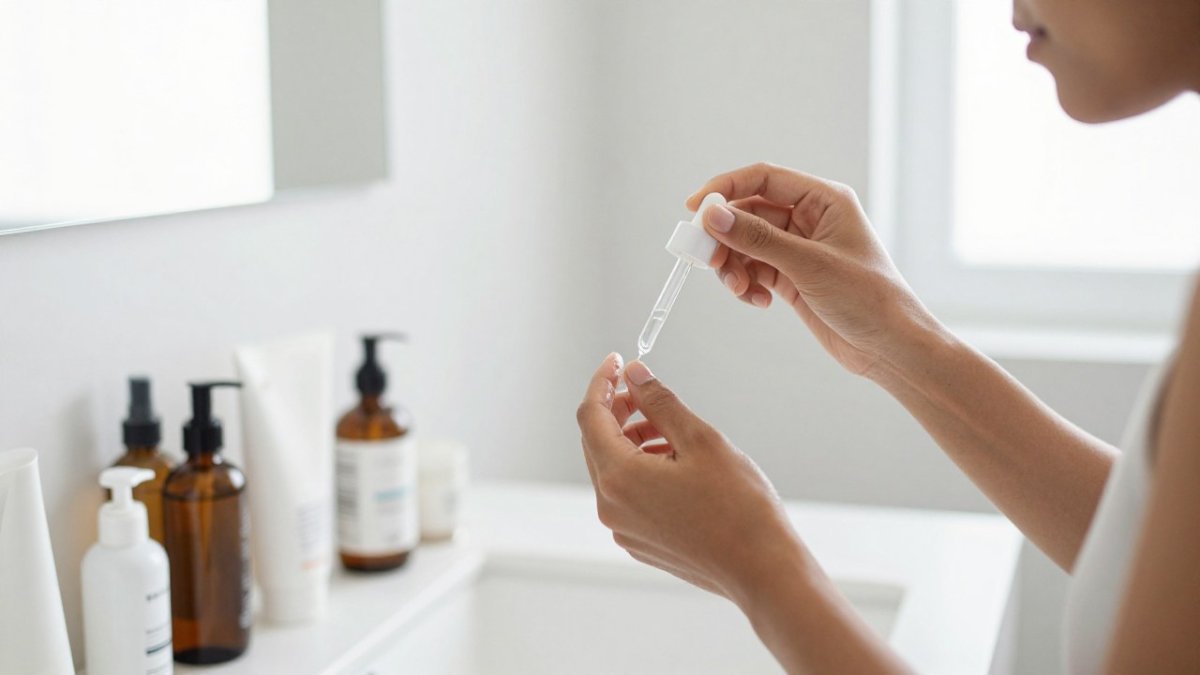
Here is the order we recommend, and why each step earns its place:
- Morning: mild gel cleanser, then a hydrating essence, then a light moisturiser, then sunscreen. Sunscreen is non-negotiable; UV exposure worsens redness and post-inflammatory marks.
- Evening: cleanse off sunscreen, apply essence to damp skin, then a richer repair cream to seal in moisture overnight.
- Twice weekly at most: a soothing mask. More than that risks overload on reactive skin.
Keep the number of products low. Every extra step is another ingredient your barrier has to tolerate.
Ingredients to Avoid for Sensitive Skin
Ingredient reading is the single most useful skill for reactive skin, and it beats brand loyalty every time.
Then look at the actives. Strong exfoliating acids, high-strength retinoids and low-pH vitamin C all have their place, but not all at once on a compromised barrier. Introduce one at a time.
What to look for instead: ceramides, glycerin, hyaluronic acid, panthenol and colloidal oat, all of which support moisture retention and calming. A short ingredient list with recognisable names is usually kinder than a long one with a dozen botanicals.
How to Patch Test Skincare Products Safely
Patch testing is the step almost everyone skips, and it is the cheapest way to avoid a week of redness.
If the patch is clear, introduce the product alone for three to four days before adding anything else, so a reaction points to exactly one cause. Note the date and product name.
Watch out: testing a product on your jawline while still using three other new products tells you nothing, because you cannot isolate the trigger. One new product at a time is the only reliable method.
Sensitive Skin vs Specific Skin Conditions
Sensitivity is a symptom pattern, not always a diagnosis, and that distinction changes what you should buy.
If you have persistent itching, cracking, weeping patches, or a rash that spreads, that points toward a condition such as eczema or contact dermatitis, which needs a doctor’s assessment. The same applies to persistent flushing with papules, which may be rosacea.
This is where we draw a firm line: no moisturiser on this list is a treatment for a medical condition. Use these products to support a routine, and get a diagnosis for anything that does not settle.
Where to Buy Sensitive Skin Products in the UAE
Availability is the quiet problem with sensitive-skin shopping here. A product can be excellent and still be impossible to reorder consistently, which matters because switching formulas mid-routine is exactly what reactive skin dislikes.
Buy from retailers that state clearly what they stock and how they handle returns, and check pack size against price rather than comparing headline prices alone.
Sensitive skin rarely needs more products; it needs fewer, better-chosen ones and the patience to introduce them slowly.
Frequently Asked Questions
What is the best skincare routine for sensitive skin?
A sensitive skin skincare routine should be simple and consistent: a mild cleanser, a hydrating essence or serum, a soothing moisturiser, and a mineral sunscreen in the morning. Introduce one new product at a time and patch test first. Avoid harsh exfoliants and fragrance. In the UAE climate, lightweight layers work better than heavy creams during the day, while a richer moisturiser at night helps lock in moisture.
Which skincare ingredients are best for sensitive skin?
Look for ingredients that support the skin barrier and calm irritation: hyaluronic acid, rice extract, azulene, snail mucin, ceramides, and glycerin. These help with hydration and moisture retention without triggering redness. Fragrance-free and alcohol-free formulas are safer choices. Products described as dermatologist approved or formulated for sensitive skin are a useful starting point, but always check the full ingredient list.
What ingredients should people with sensitive skin avoid?
Common triggers include added fragrance, essential oils, alcohol denat, sulfates, and strong exfoliating acids like glycolic acid at high concentrations. Retinol can also cause irritation if introduced too quickly. For reactive skin, choose fragrance-free products and avoid anything with a long list of botanical extracts. If a product stings or causes redness, stop using it and simplify your routine.
How should I patch test a new skincare product?
Apply a small amount to a discreet area such as the inner forearm or behind the ear. Wait 24 to 48 hours and check for redness, itching, or flaking. If there is no reaction, test again on a small area of the face. Introduce only one new product at a time so you can identify the cause of any irritation. Keep a simple log of what you use and when.
Can sensitive skin use retinol or exfoliating acids?
Yes, but with caution. Start with a low concentration of retinol once a week and buffer with a moisturiser. For exfoliation, choose gentler options like lactic acid or mandelic acid over strong glycolic peels. Stop if you notice persistent redness or stinging. If you have a diagnosed condition like eczema, ask a dermatologist before adding actives to your sensitive skin skincare routine.