Last Updated: October 29, 2026
Quick Summary
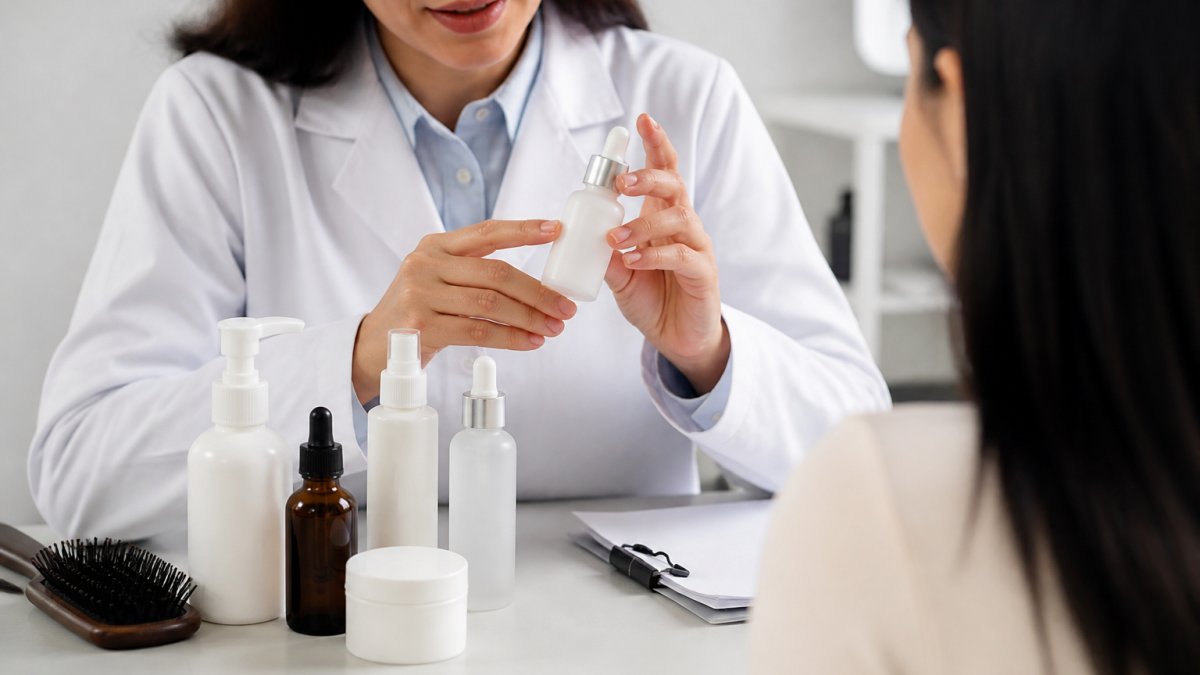
Dermatologist tested hair products for thinning are formulas assessed by a qualified skin and hair specialist, usually for irritation risk and ingredient safety, not for proven regrowth. We treat that label as a starting point, not a guarantee that density will return.
- Shedding is daily loss of old hairs; hair loss is density loss that outpaces regrowth.
- Judge a thinning shampoo on scalp-health actives and a leave-on treatment on growth-cycle actives.
- Ketoconazole targets the yeast linked to flaking and scalp inflammation, not regrowth.
- Apply minoxidil to a fully dry scalp, since damp or product-coated skin dilutes absorption.
- Space strong actives by a few days to protect the scalp barrier and microbiome.
Table of Contents
- What Dermatologist Tested Hair Products for Thinning Actually Prove
- Hair Shedding vs Hair Loss: Which One Are You Treating?
- Hair Loss Shampoo Ingredients That Have Evidence Behind Them
- How to Pick the Best Shampoo for Thinning Hair
- Minoxidil for Hair Loss: Where It Fits in a Routine
- Ingredient Interaction Safety and Scalp Microbiome Health
- Building a Budget-Conscious Routine and Knowing When to See a Professional
- Ordering Your Thinning Hair Routine with Confidence
- Frequently Asked Questions
What Dermatologist Tested Hair Products for Thinning Actually Prove
Dermatologist tested hair products for thinning are formulas assessed by a qualified skin and hair specialist, usually for irritation risk and ingredient safety, not for proven regrowth. We treat that label as a starting point, not a guarantee. For a related example, see this roundup of dermatologist recommended products for acne. It tells you the product is unlikely to harm your scalp; it does not tell you it will restore density.
The distinction matters because thinning has several causes, and a well-tested shampoo cannot correct a hormonal or nutritional trigger. Below, we break down which ingredients carry real evidence, how to separate normal shedding from genuine hair loss, and how to build a routine that respects both your scalp and your budget.
Hair Shedding vs Hair Loss: Which One Are You Treating?
Shedding is the daily loss of old hairs as part of the natural growth cycle; hair loss is a sustained reduction in scalp density that outpaces regrowth. Most people lose a normal amount of hair each day, and that is healthy turnover. The problem starts when what falls out is not replaced.
Watch for these signals that separate routine shedding from something worth investigating:
- Loss that continues for several weeks rather than days
- Visible widening of a parting or thinning at the temples
- Hairs that look finer and shorter than the rest
- Scalp itching, flaking or tenderness alongside the shedding
A common mistake is treating a temporary shed, often triggered by stress, illness or a change in routine, with aggressive regrowth products. Give a short-lived shed a few weeks to settle before you escalate.
Hair Loss Shampoo Ingredients That Have Evidence Behind Them
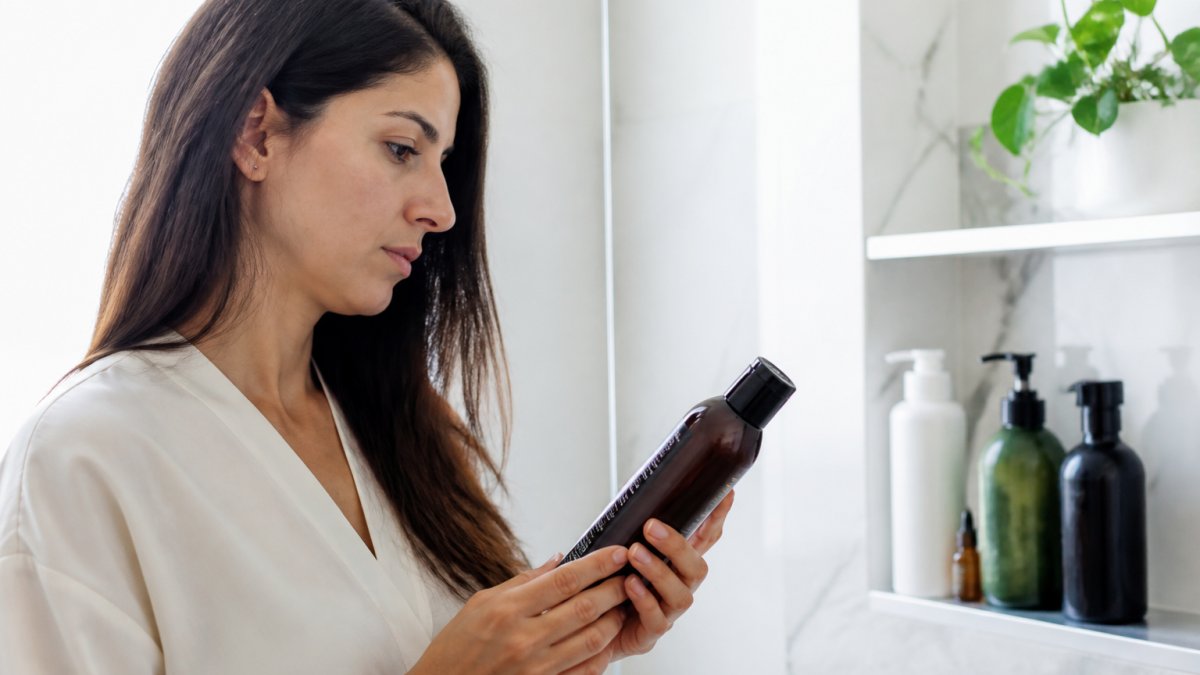
The ingredients worth your attention are the ones studied for their effect on the hair growth cycle and scalp environment. A shampoo’s active has minutes, not hours, to work, so the clinical question is not just “is this ingredient studied?” but “does this concentration and contact time do anything?”
Here is how the main actives actually behave:
- Caffeine. Caffeine is studied for its effect on follicle stimulation and scalp microcirculation. In wash-off formulas it is generally considered a supporting ingredient rather than a standalone regrowth agent.
- Ketoconazole. This antifungal targets the yeast linked to seborrheic flaking and scalp inflammation. Because inflammation is a known driver of shedding, controlling it can indirectly support density. It is one of the few shampoo actives with a clear, measurable mechanism, but it is a scalp-health tool, not a regrowth drug.
- Peptide complexes. Copper peptides and similar signal peptides appear in formulas marketed against dihydrotestosterone (DHT) and follicle miniaturisation. The evidence for cosmetic concentrations is weaker than for prescription options, and peptides need leave-on contact time to perform. Treat them as a bonus in a cleanser, not the reason to buy.
- Saw palmetto. A botanical often positioned as a natural DHT blocker. Topical evidence is preliminary and concentration-dependent; it is reasonable as a complementary active but should not replace a proven treatment.
- Biotin and nutrient support. Biotin is most relevant when a deficiency exists, which a clinician can assess.
A practical rule: judge a thinning shampoo on its scalp-health actives and judge a leave-on treatment on its growth-cycle actives.
Pro Tip
Check where the active sits on the ingredient list. Ingredients are generally listed in descending order of concentration.
Check where the active sits on the ingredient list. Ingredients are generally listed in descending order of concentration.
Here is how the main shampoo actives the article covers actually behave.
| Active | What it targets | Key limitation |
|---|---|---|
| Caffeine | Follicle stimulation and scalp microcirculation | Supporting ingredient in wash-off formulas |
| Ketoconazole | Yeast linked to flaking and scalp inflammation | Scalp-health tool, not a regrowth drug |
| Peptide complexes | DHT and follicle miniaturisation | Weaker evidence at cosmetic concentrations; needs leave-on time |
| Saw palmetto | Positioned as a natural DHT blocker | Preliminary, concentration-dependent topical evidence |
| Biotin and nutrient support | Deficiencies a clinician can assess | Most relevant only when a deficiency exists |
How to Pick the Best Shampoo for Thinning Hair
The best shampoo for thinning hair matches your scalp type first and your thinning pattern second. A dry, sensitive scalp needs a gentle cleanser; an oily scalp with flaking needs an active that controls inflammation. Choosing by marketing claims alone is where most routines go wrong.
Use this checklist before you buy:
- Does the label list a named active, not just “botanical complex”?
- Is it matched to your scalp type: dry, oily or sensitive?
- Have you checked whether it is a cleanser or a leave-on treatment?
- Is the format realistic for how often you actually wash your hair?
A shampoo is a wash-off product with limited contact time. Expect it to support scalp health and reduce breakage, not to reverse pattern thinning on its own.
Minoxidil for Hair Loss: Where It Fits in a Routine
Topical minoxidil is the most established over-the-counter treatment for androgenetic alopecia, and it works best as a consistent daily habit rather than an occasional add-on. It supports the anagen phase, the growth stage of the hair cycle, and results depend on continued use. Stopping usually reverses the gain.
What most guides skip is the practical sequencing:
- Concentration. Over-the-counter topical minoxidil is typically available in 2% and 5% strengths. Over-the-counter topical minoxidil is available in different strengths, and product labelling and a pharmacist or dermatologist can guide the choice. Follow the product labelling and, if you are unsure, confirm with a pharmacist or dermatologist.
- The shedding phase. Many users notice increased shedding in the first few weeks as older hairs cycle out to make way for new growth. This is expected and usually settles. Abandoning the product at this stage is the most common reason people conclude “minoxidil didn’t work.”
- Timeline. Visible change typically takes several months of consistent use.
- Application order. Cleanse with a supportive shampoo, let the scalp dry fully, then apply minoxidil to the thinning areas. Applying to a damp or product-coated scalp dilutes absorption and increases the risk of irritation.
- What not to layer on the same day. Avoid applying minoxidil immediately after an exfoliating scalp treatment or alongside a strong ketoconazole wash on the same evening, the combination can leave the barrier raw. Space strong actives by a few days.
The key is to treat minoxidil as the backbone of the routine and everything else as support, not the reverse.
Watch Out
Minoxidil is not appropriate for everyone. If you are pregnant, breastfeeding, or managing a scalp condition, speak to a healthcare professional before starting.
Minoxidil is not appropriate for everyone. If you are pregnant, breastfeeding, or managing a scalp condition, speak to a healthcare professional before starting.
Ingredient Interaction Safety and Scalp Microbiome Health
Layering several actives at once is where well-intentioned routines backfire. The scalp barrier and its microbiome, the community of organisms that keep the scalp balanced, respond badly to over-cleansing and stacked irritants. A shampoo with ketoconazole, a leave-on minoxidil and an exfoliating treatment used on the same day can leave the scalp raw and inflamed, which itself drives shedding.
Watch out: combining strong actives without spacing them out can cause irritation that looks like worsening hair loss.
Tools that increase absorption change how products penetrate, so introduce them slowly and never on an irritated scalp. Space new actives by a few days and stop anything that stings or burns.
Building a Budget-Conscious Routine and Knowing When to See a Professional
A sensible routine can be built in tiers, and you do not need to buy everything at once. Start with one evidence-based cleanser and one leave-on treatment, then add oral support only if a deficiency is confirmed. Nutrient support can be a reasonable entry point, but it is not a substitute for treating a diagnosed cause.
See a professional when loss is rapid, patchy, accompanied by scalp disease, or linked to a recent pregnancy or menopause. Post-partum and menopausal thinning follow different hormonal patterns and benefit from tailored protocols rather than generic products. A dermatologist can confirm the type of hair loss before you spend more.
Ordering Your Thinning Hair Routine with Confidence
Dermatologist tested hair products for thinning are a useful filter for safety, but the real work is matching actives to your scalp, spacing them sensibly, and knowing when a professional should step in.
Saha Jamal offers MoH-licensed haircare, a flat AED 15 shipping charge, estimated delivery within 2-3 working days, and 100% secured payments. Shop today and put together a routine you can actually keep.
Frequently Asked Questions
Are dermatologist tested hair products the same as dermatologist-recommended products?
No. Dermatologist tested usually means the product was assessed for skin tolerance, often through patch testing or supervised use, so it is unlikely to irritate the scalp. Dermatologist recommended means a doctor actively suggests it for your condition. A product can be tested and still not be the right choice for androgenetic alopecia or telogen effluvium. Look for the specific actives, such as topical minoxidil, ketoconazole or caffeine, and match them to your type of hair thinning rather than relying on the tested label alone.
What ingredients should I look for in products for thinning hair?
Start with ingredients that have clinical backing: topical minoxidil for androgenetic alopecia, ketoconazole for scalp inflammation and dandruff-related shedding, caffeine to support scalp circulation, and niacinamide or peptides for scalp barrier support. Biotin and saw palmetto appear in many supplements and shampoos, but evidence is weaker and they work best when a nutrient deficiency is confirmed. Avoid stacking several strong actives at once, because irritation can increase hair shedding rather than reduce it.
How can I tell whether hair thinning needs medical attention?
See a dermatologist if you notice sudden or patchy hair loss, a visibly widening part, receding at the temples, or shedding that continues for more than three months. These patterns can point to androgenetic alopecia, telogen effluvium or a thyroid or nutrient issue that shampoo alone will not fix. A doctor can confirm the cause and discuss prescription options. Products bought online can support a routine, but they should not replace a diagnosis when the pattern is clearly medical.
Can shampoo alone help with thinning hair?
Shampoo can improve scalp health, reduce breakage and remove buildup that weighs hair down, which makes existing hair look fuller. It rarely regrows hair on its own. If the cause is androgenetic alopecia, a leave-on treatment such as minoxidil does most of the work, while a well-chosen shampoo supports the scalp environment. Think of shampoo as the foundation of a routine, not the whole treatment, and give any routine at least three to four months before judging results.