Last Updated: November 1, 2026
Quick Summary
To buy supplements online safely, verify the seller’s health authority license number against the regulator’s public register, confirm a padlock and matching domain at checkout, and check for an unbroken seal, clear batch and expiry date, and a certificate of analysis on request. Never pay via personal bank account, informal transfer, or card details sent over messaging apps.
- Our MoH license number is HAVU1MDZ-110326 and should be shown openly on a licensed site.
- Compare products on cost per serving, not cost per bottle, using serving size and active ingredient amounts.
- Ask for the certificate of analysis matching your bottle’s batch number, not a generic sample.
- Blood thinners can interact with high-dose fish oil or vitamin E, so consult a pharmacist first.
- Treat a payment page whose domain does not match the store’s domain as a stop signal.
Table of Contents
- Why Buying Supplements Online Needs a Checklist
- How to Spot Counterfeit Supplements Online Before You Pay
- How to Pay Safely on Pharmacy Websites
- How to Check Supplement Ingredients and Labels
- Supplement Safety and Interactions with Medicines
- A Seller and Product Verification Checklist to Run Before Checkout
- Frequently Asked Questions
Why Buying Supplements Online Needs a Checklist
Buying supplements online is convenient, but it puts the burden of verification on you. A bottle can look professional and still be fake, expired, or stored badly.
At Saha Jamal, we operate as an MoH-licensed online healthcare provider. A licensed site will show its license number openly, and ours is HAVU1MDZ-110326.
Most guides tell you to “buy from a trusted source” and stop there. That advice is useless.
How to Spot Counterfeit Supplements Online Before You Pay
Counterfeit supplements are copies made to look like real brands. They often use cheap fillers, wrong doses, or no active ingredient at all. The packaging is the first place to look.
Run these checks before you add anything to a cart:
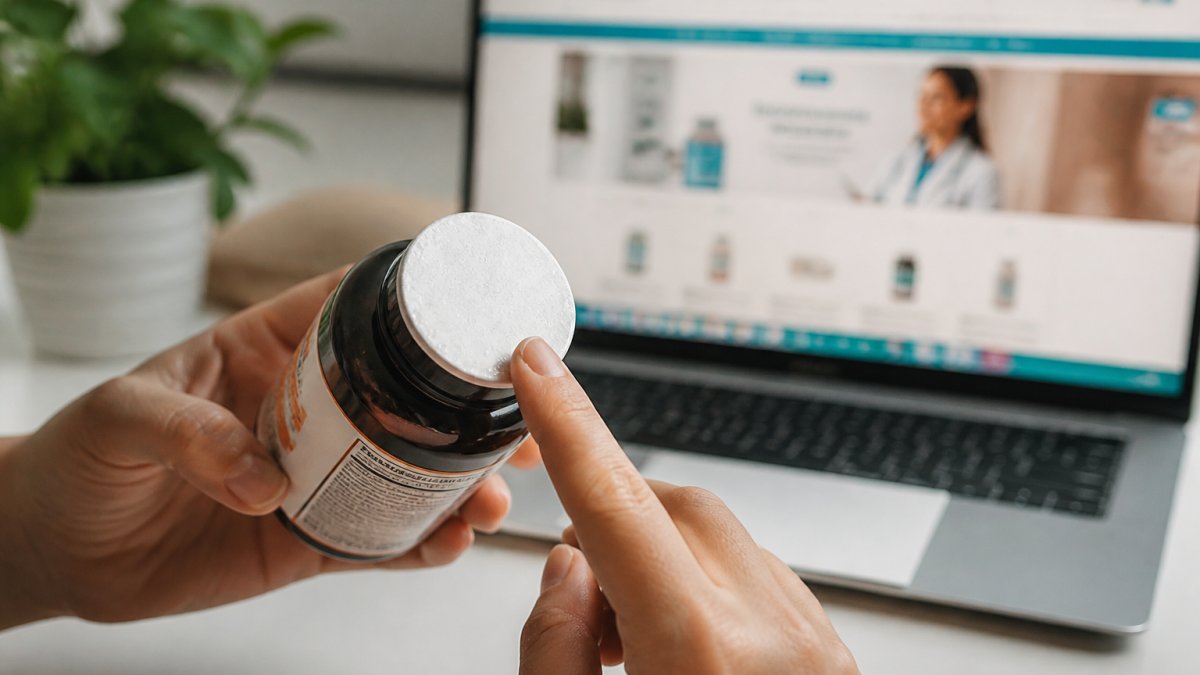
- Seal integrity: The safety seal should be unbroken and tight. A loose or missing seal is a red flag.
- Batch and lot numbers: Every real product has a batch number and an expiration date stamped clearly. Fakes often smudge or skip them.
- Print quality: Blurry text, odd fonts, or misspelled words point to a copy.
How to Pay Safely on Pharmacy Websites
Payment is where a convincing fake storefront can do the most damage. A site can copy a real pharmacy’s logo, product photos, and even its license number, then harvest card details at checkout.
Verify the checkout environment before you type anything
- Confirm the URL and certificate. The address bar should show a padlock and the exact domain you expect. Tap the padlock to view the certificate.
- Check for HTTPS across the whole journey, not just the homepage. If you are redirected to an unsecured page at payment, stop.
- Look for a visible commercial registration and health authority license number, and cross-check it against the regulator’s public register rather than trusting the site’s own claim.
Recognize payment requests that should never happen
Treat any of the following as a stop signal:
- A request to transfer money to a personal bank account or by informal money transfer rather than a business account.
- A request for card details, a one-time password, or a copy of your Emirates ID sent over WhatsApp, Telegram, or email.
- A demand for payment before you can see a verifiable license, physical address, or return policy.
A common pattern in fake storefronts is a polished product page with a checkout that quietly redirects to a third-party payment link. If the payment page domain does not match the store’s domain, close the tab.
Protect your card and personal data
- Avoid saving card details on any site you have not bought from before; guest checkout limits what a breach can expose.
- Never share your Emirates ID, passport copy, or one-time passwords to “verify” an order. A legitimate pharmacy does not need these to sell you a supplement.
Watch Out
If a seller asks you to move the conversation to a private messaging app to complete payment, treat the order as unsafe. Payment outside a traceable, regulated gateway removes nearly all of your ability to recover funds.
If a seller asks you to move the conversation to a private messaging app to complete payment, treat the order as unsafe. Payment outside a traceable, regulated gateway removes nearly all of your ability to recover funds.
Check the returns and refund terms before paying
A clear returns policy is both a consumer protection and a fraud signal. Before checkout, confirm:
- The return window and whether opened products are eligible.
For a deeper walkthrough on protecting your card, read our guide on how to protect credit card online when shopping.
At Saha Jamal, payments are 100% secured.
How to Check Supplement Ingredients and Labels
The ingredient label is the most honest part of any supplement, but only if you know how to read it. The front of the bottle is marketing; the supplement facts panel and the “other ingredients” list are where the real information sits.
Start with the supplement facts panel
- Serving size first. This tells you how many capsules, tablets, or scoops make one dose. Compare products on cost per serving, not cost per bottle.
- Amount per serving. Check the actual quantity of each active ingredient, not just its presence. A “proprietary blend” that hides amounts gives you no way to judge whether the dose is meaningful.
- % Daily Value. This shows how much of each nutrient one serving provides relative to a standard daily intake, helping you spot under- or over-dosing and compare brands fairly.
Read the “other ingredients” list
These are the fillers, binders, flow agents, preservatives, and sweeteners that make up the rest of the capsule or tablet. They are not automatically harmful, but they matter:
- Fewer excipients is generally better for people with sensitivities or dietary restrictions.
- Watch for allergens such as gluten, soy, dairy, or gelatin.
- Check for added sugars or sweeteners in gummies and powders, which can add calories and affect blood sugar.
Verify claims rather than trusting them
Front-of-pack claims like “natural,” “clinically proven,” or “doctor-formulated” are marketing terms, not regulated guarantees. Instead, look for:
- A named manufacturer on the label.
- A batch or lot number and expiry date stamped clearly, these make a product traceable and are what a certificate of analysis refers to.
- A certificate of analysis (COA) available on request, showing a specific batch was tested for identity, purity, and potency. Ask for the COA matching the batch number on your bottle, not a generic sample.
Pro Tip
Third-party testing is a snapshot, not a guarantee. It can confirm that a batch contains what the label says and is free of certain contaminants, but it does not prove the product works or is safe for your personal situation. Pair testing evidence with the label checks above and with advice from a pharmacist.
Third-party testing is a snapshot, not a guarantee. It can confirm that a batch contains what the label says and is free of certain contaminants, but it does not prove the product works or is safe for your personal situation. Pair testing evidence with the label checks above and with advice from a pharmacist.
Compare products on a like-for-like basis
To compare two supplements fairly, line up four numbers: serving size, amount of active ingredient per serving, cost per serving, and number of servings per container. A product that looks cheaper per bottle can be far more expensive per effective dose.
If a label is vague, the batch number is missing, or the seller cannot produce a COA on request, treat that as a reason to walk away, no matter how good the price looks.
Supplement Safety and Interactions with Medicines
Supplements can interact with medicines you already take, the part most buying guides skip, and it matters more than any discount.
Some common risks:
- Blood thinners can interact with high-dose fish oil or vitamin E.
- Certain herbs can change how the body processes prescription drugs (the WHO).
- Too much of a vitamin can cause harm, not just wasted money.
If you take prescription medicine, are pregnant, or are managing a health condition, talk to a doctor or pharmacist before you start any supplement.
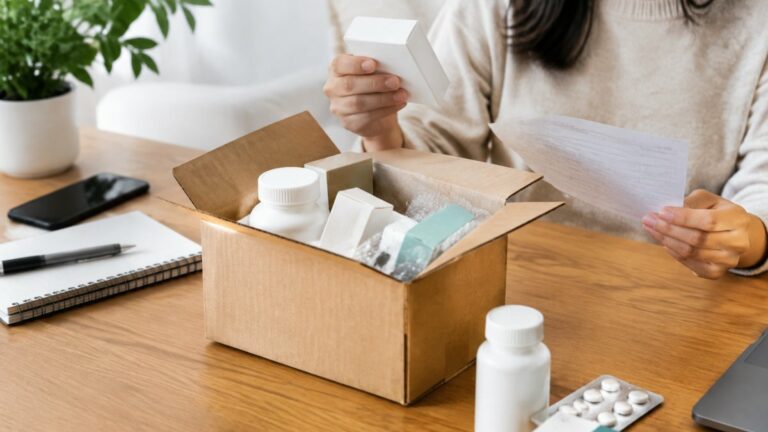
Storage and delivery matter too. Heat and damp can damage products in transit, so order from sellers who ship properly and check the expiration date when the parcel arrives.
A Seller and Product Verification Checklist to Run Before Checkout
This is the checklist to keep. Run it every time you buy supplements online, and you will avoid most of the traps.
| Check | What to Look For | Why It Matters |
|---|---|---|
| License | Visible health authority license number | Confirms the seller is legal |
| Seal | Unbroken safety seal | Shows the product is untouched |
| Label | Full ingredient and dosage list | Lets you compare and spot fillers |
| Batch number | Clear batch and expiry date | Proves the product is traceable |
| Payment | Padlock and secure gateway | Protects your card details |
| Returns | Clear return and refund policy | Gives you a way out if something is wrong |
| Reviews | Specific, balanced customer feedback | Shows real seller reputation |
Third-party testing and quality certification are worth asking about. A certificate of analysis shows a batch was tested for purity and potency.
Watch out: a fake certificate of analysis is easy to make. Ask the seller directly and see if the answer is clear and specific.
Frequently Asked Questions
How can I tell if an online supplement seller is legitimate?
Check for a visible MoH licence number on the website, a physical address and a working customer service line. A legitimate seller lists product registration details and batch numbers, and uses a secure checkout with a recognised payment provider. Beware of sites with no company information, prices far below market rate, or pressure tactics like countdown timers. Before you buy supplements online, search the seller’s name alongside ‘complaints’ and read independent reviews, not just testimonials on their own homepage.
How do I check whether a supplement is approved or registered?
In the UAE, dietary supplements must be registered with the Ministry of Health and Prevention (MoH). Look for a registration number on the product page or packaging, then cross-check it on the MoH website or ask the seller to share the certificate. A reputable pharmacy will provide this without hesitation. If a seller cannot confirm registration, treat the product as unverified and do not buy. Registration confirms the product has been reviewed for safety and labelling, not that it will work for your specific condition.
What should I look for on a supplement label before buying?
Read the ingredient list in full, including inactive ingredients, fillers, sweeteners and preservatives. Check the dosage per serving and compare it with the daily value, and note the serving size so you know how long the pack lasts. Look for an expiration date, batch or lot number, and a seal integrity check on delivery. Avoid products with proprietary blends that hide individual ingredient amounts, and be wary of claims that sound too good, such as curing chronic conditions.
Should I ask a healthcare professional before taking a new supplement?
Yes, especially if you take prescription medicines, are pregnant or breastfeeding, or manage a chronic condition. Supplements can interact with medicines: for example, vitamin K can reduce the effect of warfarin, and St John’s wort can interfere with antidepressants. A pharmacist or doctor can review your current medications and tell you whether a supplement is appropriate. Bring the product label or a screenshot of the ingredient list to your consultation so the advice is specific to what you plan to take.
Buying supplements online does not have to be a gamble. The right seller makes the checks easy and answers your questions before you pay.
At Saha Jamal, every order ships with a flat AED 15 charge, delivery in 2-3 working days, and flexible returns. Our MoH-licensed platform carries skincare, haircare, and vitamins you can trust. Get started with Saha Jamal and shop with peace of mind today.