Last Updated: November 13, 2026
Quick Summary
The best home health monitoring devices in 2026 pair a validated upper-arm blood pressure monitor with a pulse oximeter, a glucose meter if needed, and a wearable for sleep and heart rate. For home health monitoring, choose upper-arm cuffs over wrist units for dependable readings, and verify clinical validation and data privacy before buying.
- Measure upper arm circumference before shopping and match it to the cuff range printed on the box.
- Wrist monitors are sensitive to position, so treat their readings as a trend rather than a clinical figure.
- Sit still five minutes, take two readings one minute apart, and log both at the same time daily.
- For blood pressure monitors, confirm which validation protocol was used and that a published study is cited.
- Export a copy of your readings every few months in case a manufacturer retires its app.
Building a home monitoring kit?Saha Jamal delivers licensed health and wellness products across the UAE with flat AED 15 shipping.
Table of Contents
- Quick Comparison: Best Home Health Monitoring Devices 2026
- Best Home Blood Pressure Monitor Picks for Reliable Readings
- Pulse Oximeter for Home Use: What to Check Before Buying
- Home Health Monitoring Devices for Seniors: Accessibility and Alerts
- How to Monitor Blood Pressure at Home: A Step-by-Step Routine
- Accuracy, Privacy, and Data Ownership: What to Verify
- Build a Coordinated Home Monitoring Setup
- Frequently Asked Questions
Quick Comparison: Best Home Health Monitoring Devices 2026
Home health monitoring puts the numbers that matter, blood pressure, oxygen saturation, glucose and sleep, into your hands without a clinic visit.
A home health monitoring device turns a one-off check into a trend you and your doctor can read.
Below, we break down our top picks by category, explain correct usage, and flag the accuracy and privacy questions most buyers skip.
| Device | Category | Best For | Format |
|---|---|---|---|
| Saha Jamal | Supplier | Licensed products delivered home | Online store |
| Oxiline Pressure XS Pro | Blood pressure | Connected upper-arm tracking | Upper arm, Bluetooth |
| Drive Deluxe Automatic | Blood pressure | Simple daily checks | Upper arm, automatic |
| Beurer PO30 | Blood oxygen | Spot-check oxygen levels | Fingertip |
| Novamed N 04 | Blood pressure | Reliable upper-arm baseline | Upper arm |
| Veroval Wrist | Blood pressure | Portable wrist checks | Wrist |
| Trister Glucose System | Blood glucose | Managing glucose at home | Meter system |
| Fitbit Air | Wearable | Sleep and heart rate | Screen-free band |
| Hume Band 2.0 | Wearable | Consolidated health picture | Wrist band |
| Withings ScanWatch Light | Wearable | Everyday health tracking | Watch |
| Medical Guardian | Alert system | In-home senior safety | Cellular base |
Best Home Blood Pressure Monitor Picks for Reliable Readings
The best home blood pressure monitor for most people is a validated upper-arm device with a correctly sized cuff and memory storage. Upper-arm placement sits closer to heart level and is the format clinicians trust for repeated readings.
Our picks split into two types. The Oxiline Pressure XS Pro is the connected option: it measures at the arm and sends readings to an app over Bluetooth, suiting anyone building a log for a doctor. The Drive Deluxe Automatic keeps it simple with push-button operation and no app dependency.
A common mistake is buying a cuff that is too small. Measure your upper arm circumference before you shop and match it to the cuff range printed on the box.
Upper-Arm vs Wrist Monitors: Which Format Suits You?
Choose an upper-arm monitor for the most dependable readings and a stable surface to rest your arm on. Choose a wrist monitor if portability matters more than precision and you can hold your wrist exactly at heart level during the reading.
Wrist devices are sensitive to position, raise or lower the wrist a few centimetres and the number moves. For a fixed home setup, an upper-arm unit such as the Novamed Automatic Upper Arm BP Monitor N 04 lets you measure seated at a table, the same way each morning.
Pulse Oximeter for Home Use: What to Check Before Buying
A pulse oximeter for home use measures blood oxygen saturation and pulse through a fingertip sensor. Look for a clear display, a reading that stabilises within seconds, and a device that shows both oxygen saturation and heart rate.
Three checks before you buy:
- Display legibility: large digits matter if an older adult is using it.
- Perfusion indicator: a quality unit shows signal strength so you know the reading is valid.
- Battery type and spares: a device that dies mid-check is useless.
Cold hands, nail polish and movement all distort readings, warm your hands first and hold still. The Beurer Pulse Oximeter PO30 is a fingertip model worth inspecting for display clarity and ease of use.
Home Health Monitoring Devices for Seniors: Accessibility and Alerts
For seniors, the best home health monitoring devices are the ones that get used every day without frustration: large buttons, spoken or oversized readouts, one-touch operation and, where needed, an alert system that calls for help. Accessibility determines whether a device gets used or abandoned.
What to Test Before You Buy
Evaluate any device against the specific limitations of the person who will use it, not an abstract “senior” profile. Three checks matter most:
- Vision: Can the display be read at arm’s length without glasses? A backlit display with digits at least 20 mm tall is a practical minimum for many older adults.
- Dexterity: Can the cuff be fitted with one hand? Do buttons require a firm press? Cuff tubes that twist and stiffen over time are a common failure point.
- Cognition: How many steps from power-on to reading? A device requiring menu navigation, user selection, or app pairing before measuring will lose adherence. One-touch operation is the gold standard.
A device with a tiny screen and multi-step menus often ends up in a drawer. Test the buttons and display before you buy, and if possible, have the intended user try the device in the store or during a home visit.
Alert Systems and Response Services
Medical alert systems add a layer beyond measurement: a wearable button and base unit connected to a response service. These are typically subscription products, so confirm coverage and terms before committing. Ask the provider whether its response centre operates locally and whether the service covers your emirate, and check current pricing directly with the provider.
A measurement device tells you what the numbers are; an alert system tells someone else when something goes wrong. Many households need both.
Caregiver Access and Shared Monitoring
Accessibility is not only about the patient. Caregivers, family members, home nurses, or domestic workers, often need to see readings without taking over the device. Look for:
- Multi-user profiles on blood pressure monitors and glucose meters, so two people in one household can track separately.
- App sharing or guest access that lets a family member view trends remotely without editing settings.
- Printed or exportable logs for caregivers who are not comfortable with smartphones.
A common pattern is a senior using the device independently while an adult child reviews the weekly trend. Devices that support this split, simple on the device, richer on the app, tend to have the highest long-term adherence.
Building a Low-Friction Routine
Pair monitoring with simplicity. A blood glucose system like the Trister Blood Glucose System complements blood pressure and oximetry devices for a senior managing diabetes.
For seniors living alone, consider a device with an audible confirmation, a beep or spoken reading, so the user knows the measurement completed without reading a small screen. Confirm that any connected device continues to measure and display readings if the home internet or phone connection drops; local display should never depend on the cloud.
How to Monitor Blood Pressure at Home: A Step-by-Step Routine
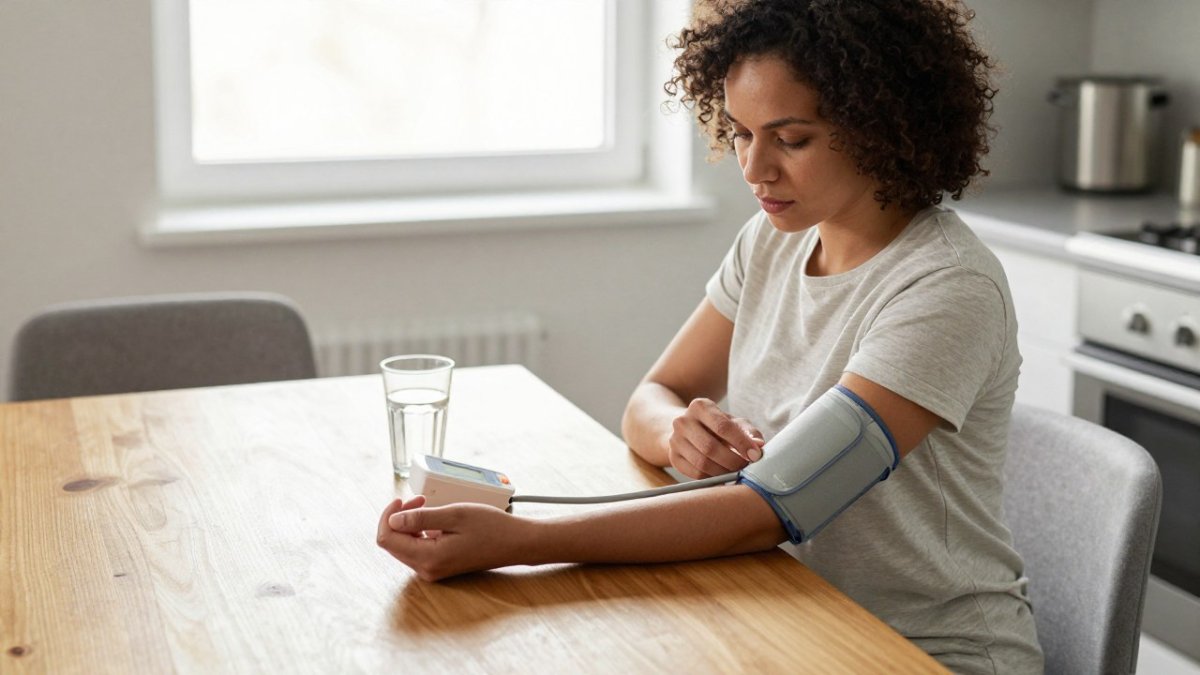
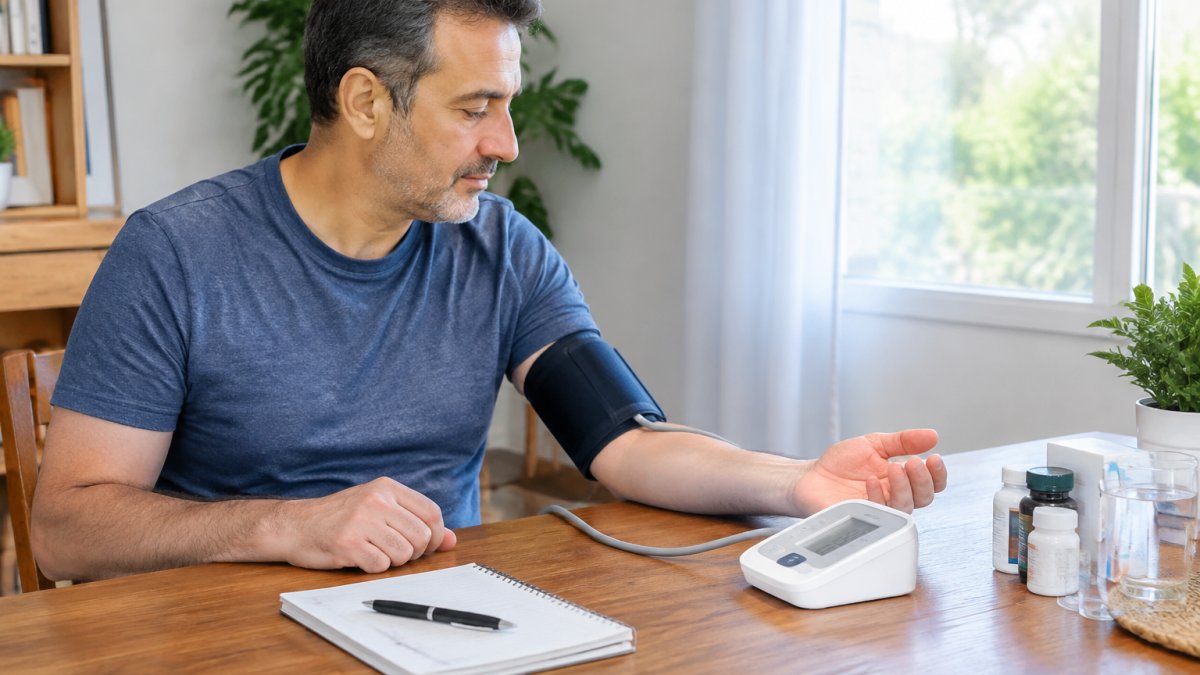
To monitor blood pressure at home, sit still for five minutes, rest your arm at heart level, take two readings one minute apart, and record both at the same time each day. Consistency matters more than any single number.
Total time: about 10 minutes per session.
- Empty your bladder and avoid caffeine for 30 minutes before measuring.
- Sit with your back supported, feet flat, arm resting on a table at heart level.
- Fit the cuff on bare skin, one finger-width above the elbow.
- Rest for five minutes before the first reading.
- Take two readings, one minute apart, and note both.
- Log the date, time and numbers in the device memory or a notebook.
They are of mixed backgrounds.
Common Mistakes That Skew Home Readings
The most common errors are talking during the reading, a cuff over a sleeve, and measuring right after climbing stairs, each can push the number up or down enough to mislead you.
Other frequent slips: crossing your legs, an unsupported back, and treating one reading as final. Take two and average them; if a reading looks unusual, wait five minutes and repeat.
Accuracy, Privacy, and Data Ownership: What to Verify
Accuracy and data ownership are the two things buyers check last and regret first. Verify that a device carries a recognised validation mark, and confirm where your readings are stored and who can access them.
What Clinical Validation Actually Means
A consumer device is not automatically accurate because it is sold in a pharmacy.
For pulse oximeters, look for a stated accuracy specification, typically a root-mean-square deviation (RMSD) figure against arterial blood gas reference, and note that accuracy degrades at low saturation and in poor perfusion.
Cuff size matters as much as validation. A monitor validated with a standard cuff will not give reliable readings on a large or very small arm unless the correct cuff is fitted, measure your upper arm circumference and match it to the range printed on the box.
Privacy and Health-Data Ownership
Connected devices collect sensitive data, and the app is often the weakest link. Health data is generally regarded as sensitive personal data, and UAE data-protection rules govern how it may be collected and processed. You should be able to find out what data the app collects, why, where it is stored, and whether it is shared with third parties. Check the privacy policy for:
- Account requirement: Does the app work without creating an account, or is registration mandatory?
- Cloud sync: Are readings stored only on the device, or uploaded to a cloud service? If cloud, in which country are servers located?
- Sharing controls: Can you turn off sharing with the manufacturer, insurers, or marketing partners?
A connected device is only as good as the control you keep over its data. If a privacy policy is unavailable in English or Arabic, or does not name a data controller, treat that as a warning sign.
Interoperability and Long-Term Data Management
For long-term use, favour devices that let you export readings in a common format. That keeps your history portable if you switch phones or apps. Practical questions to ask:
- Export format: CSV and PDF are the most portable; proprietary formats lock you in.
- Clinician sharing: Can you generate a report your doctor can read without installing the app?
- Cross-device tracking: If you use a blood pressure monitor and a wearable from different brands, can both feed one timeline, or will you maintain separate logs?
A common pattern is a patient accumulating years of readings in one app, then losing access when the app is retired. Exporting a copy every few months is a simple safeguard.
Buying from a Licensed Source
When you order supplies, a licensed source matters. Saha Jamal is an MoH-licensed platform (License No: HAVU1MDZ-110326) offering delivery across the UAE. A licensed supplier should confirm the device’s validation status, provide Arabic and English instructions, and handle warranty or replacement-cuff requests. Confirm the return window and whether replacement cuffs, sensors, and test strips are stocked locally before committing to a device that depends on recurring supplies.
Build a Coordinated Home Monitoring Setup
The strongest setup is a small, coordinated kit: an upper-arm blood pressure monitor, a pulse oximeter, a glucose meter if needed, and a wearable for sleep and activity. Each covers a different health metric, and together they give a fuller picture than any single device.
Start with the metric your health need demands most, add one device at a time, and keep the routine identical each day. If you are comparing blood pressure options, the Numed Blood Pressure Monitor NM 24 is worth checking against your shortlist for specs and fit.
Choosing the right devices is only half the job; buying them from a source you trust is the other half.
Frequently Asked Questions
Are home blood pressure monitors accurate?
Upper-arm monitors from established brands are generally accurate when the cuff fits correctly and you follow the instructions. Accuracy depends on proper placement, sitting still, and avoiding caffeine or exercise for 30 minutes beforehand. Look for a device with a validated measurement method and check it against a reading taken at a clinic. Home health monitoring devices are screening tools, not a diagnosis, so bring your readings to your doctor for interpretation.
Which home health monitoring devices are most useful for older adults?
For older adults, the priority is ease of use: large displays, one-button operation, and clear audio prompts. An automatic upper-arm blood pressure monitor and a pulse oximeter for home use cover the two most common daily checks. Home health monitoring devices for seniors should also include fall alerts or a medical alert system if the person lives alone. Choose a device with a cuff that fits the arm circumference and a screen readable without glasses.
How often should you check your blood pressure at home?
For most people monitoring at home, two readings a day, morning and evening, for seven days gives a reliable picture. Take each reading twice, one minute apart, and record the results. If your doctor has asked for tighter monitoring, follow their schedule. Consistent timing matters more than frequency: measure at the same times each day and log the numbers so trends are visible rather than single readings.
Can a smartwatch detect irregular heart rhythms?
Some wearables include heart rhythm notifications that flag irregular heartbeat patterns, but they are not diagnostic. A wearable health tracker can prompt you to seek a clinical check, and that is its main value. If a notification appears, confirm it with a doctor rather than relying on the device alone. For blood pressure, a dedicated home health monitoring device with a cuff remains the appropriate tool; wrist-based wearables are not a substitute.
What should I look for when buying a home health monitoring device?
Check four things: the measurement format (upper-arm cuff for blood pressure, fingertip sensor for oxygen), whether the device stores or shares readings with a mobile app, the size and clarity of the display, and how the manufacturer handles your health data. Also confirm the cuff or sensor size suits the user. Buy from a licensed seller so the product is authentic and covered by returns, and keep the manual for the recommended measurement routine.