Last Updated: October 25, 2026
Quick Summary
To improve immunity naturally in 2026, focus on regulation rather than boosting: aim for seven to eight hours of sleep, a plant-rich diet with vitamin C, vitamin D, zinc and iron, about 150 minutes of moderate activity weekly, and managed stress. Supplements only help when you correct a real deficiency.
- Most adults need seven to eight hours of sleep per night for immune function to work properly.
- Aim for 150 minutes of moderate activity per week plus two muscle-strengthening sessions.
- Zinc, vitamin D, vitamin C and iron show the clearest benefit when a shortfall is corrected.
- Log a daily stress score out of 10 and take 10 minutes of slow breathing or meditation.
- Buy only products licensed by the Ministry of Health and Prevention and check the licence first.
Table of Contents
- What Immune Health Really Means in 2026
- Signs of a Weak Immune System You Should Not Ignore
- Foods That Support Immune System Function
- Vitamins for Immune Support: What the Evidence Says
- Sleep and Immune System Health: The 7 to 8 Hour Rule
- Exercise, Stress Management and Everyday Habits
- How to Evaluate Immune-Health Claims and Products
- Building a Measurable 30-Day Immune Health Plan
- When to Speak to a Healthcare Professional
- Shop MoH-Licensed Wellness Products at Saha Jamal
- Frequently Asked Questions
What Immune Health Really Means in 2026
Immune health is the body’s ability to defend itself against infection while keeping that defence proportionate, and 2026 research has moved well past the idea of a single “boost.” If you want to know how to improve immunity naturally in 2026, the honest answer starts with a correction: your immune system is not a muscle you can inflate. At Saha Jamal, we see this confusion every day in customer questions about supplements. The immune system is a layered network of skin barriers, mucus membranes, white blood cells, antibodies and inflammatory signals that must stay balanced, not maximised. An overactive response causes allergies and autoimmune problems; an underactive one leaves you vulnerable. The goal is regulation.
Why You Cannot Simply Boost Immunity
“Boosting” immunity is a marketing phrase, not a medical one. What you can actually do is remove the things that suppress immune function and supply the raw materials it needs. That means adequate sleep, steady nutrient intake, managed stress and regular movement. A common mistake is buying a supplement before fixing any of those four. In practice, the boring habits outperform the bottle.
Signs of a Weak Immune System You Should Not Ignore
Frequent infections, slow-healing wounds, persistent fatigue and recurring colds that drag on for weeks are the classic signs of a weak immune system. None of these is a diagnosis on its own. One person catching three colds a winter may be run down; another may have an underlying condition. The distinction matters. Watch for patterns rather than single events: infections that need antibiotics repeatedly, thrush that keeps returning, or colds that consistently settle in the chest. These warrant a conversation with a clinician, not another supplement.
Foods That Support Immune System Function
Foods that support immune system function share a common profile: they supply vitamin C, vitamin D, zinc, iron and polyphenols, usually in whole, minimally processed form. The practical rule is colour and variety. A plate that changes daily beats a plate that repeats.
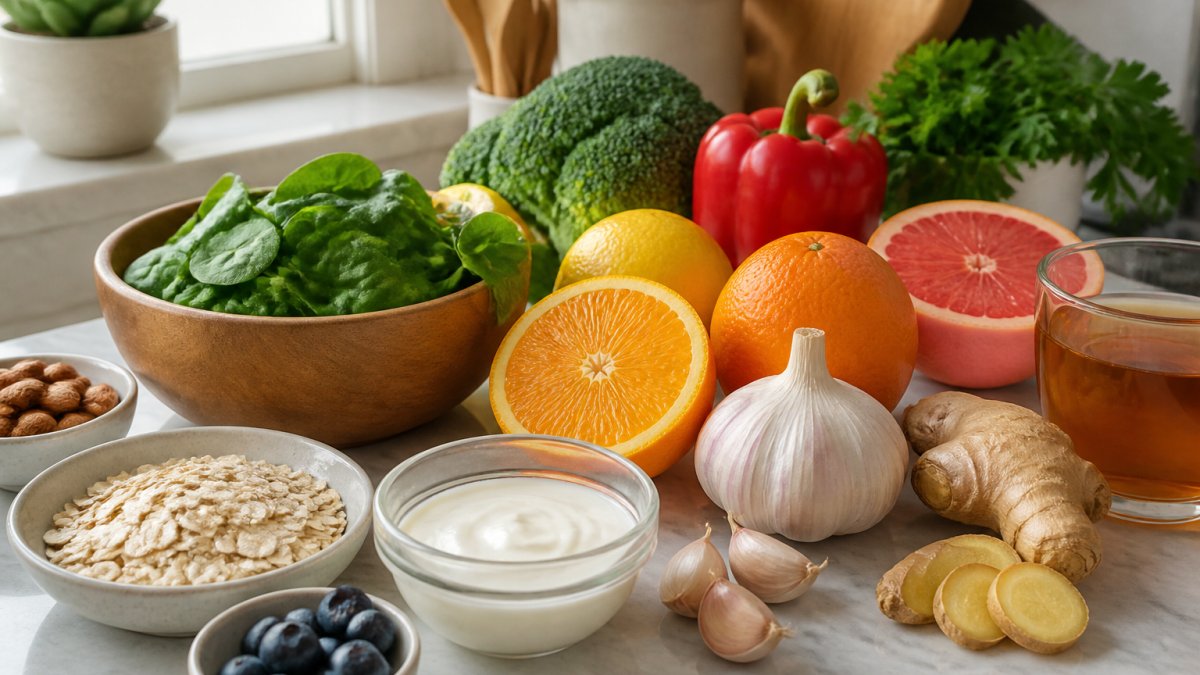
Garlic, ginger, turmeric, mushrooms, yogurt, oats, barley, shellfish and chicken soup all appear in traditional and modern guidance for good reason. Citrus and leafy greens carry vitamin C. Shellfish and legumes supply zinc. Yogurt provides live cultures. None of them works alone.
Building a Balanced, Plant-Rich Diet
A balanced diet for immune support follows a simple structure: half the plate vegetables and fruit, a quarter whole grains, a quarter protein, with healthy fats alongside. Aim for variety across the week rather than perfection on any single day. A plant-rich diet feeds the gut bacteria that train immune cells. Most people do not need a special protocol; they need more plants and fewer ultra-processed snacks.
Vitamins for Immune Support: What the Evidence Says
Vitamins for immune support matter most when you are deficient, and less when you already eat well. That single sentence is where most supplement marketing stops, but the useful detail is in the next layer: which nutrients have the strongest evidence, who is most likely to be short, what the upper limits are, and when a clinician should be involved.
Grading the evidence, nutrient by nutrient
Not all immune claims are equal. A practical way to read them is by evidence strength:
- Strong evidence for correcting deficiency: vitamin D, vitamin C, zinc and iron all have documented roles in immune function, and the clearest benefit appears when a shortfall is corrected rather than when an adequate level is topped up.
- Moderate evidence for specific groups: vitamin D supplementation is most relevant for people with limited sun exposure, darker skin tones, or those who cover up outdoors, a common pattern in this region.
- Weaker, often overstated evidence: mega-dose vitamin C for preventing colds in the general population; the effect is modest at best and does not justify routine high-dose use.
- Supporting role, not a cure: B vitamins, selenium and copper support immune function, but supplementing beyond requirement does not “boost” anything.
Key Takeaway
The honest framing is support, not boost. Nutrients supply raw materials for normal immune function; they do not prevent or cure infection on their own.
The honest framing is support, not boost. Nutrients supply raw materials for normal immune function; they do not prevent or cure infection on their own.
Who is most likely to be short
A common pattern practitioners see is deficiency clustering in predictable groups: people with limited sun exposure, those on restrictive or heavily processed diets, adults over 65, pregnant and breastfeeding women, people with chronic gut conditions that impair absorption, and anyone who has undergone bariatric surgery. If you fall into one of these groups, a blood test is more useful than guesswork, it tells you whether you actually need a supplement and at what dose.
Upper limits and interactions you should know
Supplements are not risk-free, and the risks are specific:
- Zinc: long-term high-dose use can interfere with copper absorption and cause anaemia; it should not be taken indefinitely without advice.
- Vitamin D: fat-soluble and stored in the body, so very high doses over time can raise calcium levels.
- Vitamin C: generally well tolerated, but high doses can cause digestive upset and may affect certain lab tests.
- Interactions: vitamin K can interfere with blood thinners such as warfarin; calcium and iron can reduce absorption of certain antibiotics and thyroid medication; St John’s wort, common in stress formulas, interacts with many prescription medicines.
Watch Out
If you take prescription medication, are pregnant or breastfeeding, are managing a chronic condition, or are due for surgery, speak to a pharmacist or clinician before starting any supplement. Bring the product label with you.
If you take prescription medication, are pregnant or breastfeeding, are managing a chronic condition, or are due for surgery, speak to a pharmacist or clinician before starting any supplement. Bring the product label with you.
Buying safely
In this market, buy only products licensed by the Ministry of Health and Prevention, and check the licence before you order. A licensed product has declared ingredients and doses, and there is recourse if something goes wrong; an unlicensed import may not meet labelling or quality standards.
For a ready-made option, Nutrigen Propolis Immune Support Syrup 200ml is a propolis-based syrup. If you prefer vitamin C with supporting plant compounds, Sunshine Nutrition Vitamin C 1500mg Sugar Free 20s With Rutin Rosehips combines vitamin C with rutin and rosehips. Parents looking for a child-friendly formula can browse Pediakid Immunity Strength 125 Ml. We list these as options, not prescriptions; suitability depends on your age, health status and current medications.
Sleep and Immune System Health: The 7 to 8 Hour Rule
Sleep and immune system health are tightly linked, and most adults need seven to eight hours of sleep per night for immune function to work properly. During sleep, the body releases cytokines and consolidates immune memory. Short sleep, night after night, blunts that process. The fix is consistency: a fixed wake time, a dark cool room, and no screens in the last hour. If you struggle to switch off, Sugar Bear Sleep Gummies 32s offer a melatonin-based option, but gummies support a routine, they do not replace one.
Exercise, Stress Management and Everyday Habits
Regular exercise and stress management are the two habits people skip and the two that move the needle most. The difference between advice that works and advice that gets ignored is specificity: what counts as moderate activity, how stress actually suppresses immune function, and how to adapt the plan when your week is not standard.
Exercise: the dose matters
Moderate physical activity, brisk walking, cycling or swimming for around 30 minutes on most days, supports immune surveillance without overloading the body. The mechanism is partly circulatory: movement helps immune cells travel between tissues and lymph nodes, and regular moderate activity is associated with fewer and shorter upper respiratory infections in observational work.
The dose curve is not linear. Intense training without recovery does the opposite: prolonged strenuous exercise transiently suppresses immune function, which is why endurance athletes often report infections around heavy training blocks. The practical rule is to pair hard sessions with easy days and adequate sleep, not to stack them.
Measurable targets to aim for:
- 150 minutes of moderate activity per week, spread across at least three days.
- Two sessions of muscle-strengthening activity per week.
- One rest or mobility day between hard sessions.
If your schedule is tight, three 10-minute brisk walks count the same as one 30-minute walk. If you have joint pain, swimming and cycling are lower-impact substitutes. If you are new to exercise or managing a heart condition, get clearance first.
Stress: how it suppresses immunity
Chronic stress raises cortisol, which over time blunts immune response, this is well established, not speculative. The mechanism is partly direct (cortisol suppresses inflammatory signalling and white cell function) and partly behavioural (poor sleep, poorer food choices, less movement).
Relaxation practices, breathing work and protected downtime are not luxuries; they are immune inputs. What matters is consistency, not intensity:
- 10 minutes daily of slow breathing, meditation or a screen-free wind-down.
- One protected block per week with no work messages.
- A stress score out of 10 logged daily, so you can see patterns rather than guess.
For stress-focused nutritional support, 21st Century Stress B W Zinc Tab 30s combines B vitamins with zinc, but it supports a routine, it does not replace one.
Everyday habits that compound
Small habits add up more than occasional grand gestures:
- Hand hygiene before meals and after public transport, still one of the strongest evidence-based infection-prevention measures.
- Not smoking, and limiting alcohol, both of which impair immune function.
- Staying up to date with recommended vaccinations, lifestyle support sits alongside vaccination, not instead of it.
- Hydration, especially in warmer months.
Adapting the plan to your life stage
The same advice needs different framing depending on who you are:
- Children: activity through play; sleep needs are higher than for adults; supplement use should be clinician-guided.
- Older adults: muscle-strengthening matters more, and vitamin D status is more likely to be low.
- Pregnancy: moderate activity is usually encouraged, but supplement decisions should be clinician-led.
- Chronic conditions or weakened immunity: exercise and stress plans should be adapted with a clinician; some supplements that are fine for others are not appropriate here.
Pro Tip
Pick one habit from each of the three areas, movement, stress and sleep, and track it for two weeks before adding more. Consistency beats intensity every time.
Pick one habit from each of the three areas, movement, stress and sleep, and track it for two weeks before adding more. Consistency beats intensity every time.
How to Evaluate Immune-Health Claims and Products
Treat any product promising to “boost” immunity as a claim to verify, not a benefit to accept. Check three things: the MoH licence number, the ingredient list with doses stated, and whether the wording describes support rather than cure. A product that names its active ingredients and their amounts is more trustworthy than one that hides behind a proprietary blend. Watch out: imported supplements sold without a local licence may not meet labelling or quality standards, and there is no recourse if something goes wrong.
Building a Measurable 30-Day Immune Health Plan
A measurable plan beats a vague intention. Track habits you can count, not feelings you cannot.
| Week | Focus | Daily Action | What to Track |
|---|---|---|---|
| 1 | Sleep | Fixed wake time, 7-8 hours in bed | Hours slept per night |
| 2 | Food | Add two plant portions to each main meal | Servings of vegetables and fruit |
| 3 | Movement | 30 minutes moderate activity | Active days per week |
| 4 | Stress and review | 10 minutes relaxation daily | Stress score out of 10 |
Review the four weeks together. If sleep improved but infections continued, that tells you where to look next. This is how you improve immunity naturally without guesswork.
When to Speak to a Healthcare Professional
Some situations need a clinician, not a supplement. Recurrent infections, unexplained weight loss, persistent fevers, or symptoms that last beyond a few weeks all warrant assessment. So does any plan to start supplements while pregnant, breastfeeding, or taking prescription medication. A simple blood test can reveal a nutrient deficiency that explains your symptoms, which is far more useful than guessing. If you are unsure whether a product suits you, ask before you buy.
Shop MoH-Licensed Wellness Products at Saha Jamal
Choosing immune-support products is easier when the source is licensed and the delivery is reliable. Saha Jamal is a Ministry of Health-licensed online platform (Licence No. HAVU1MDZ-110326) with over three decades of experience in the region’s beauty and healthcare industry. We charge a flat AED 15 shipping fee across the country, deliver within an estimated 2-3 working days, and use 100% secured payments with flexible returns.
Frequently Asked Questions
What are 5 signs of a weak immune system?
Common signs of a weak immune system include frequent colds or infections that last longer than expected, slow-healing wounds, recurring tiredness, frequent stomach or gut issues, and infections that keep coming back. These signs can have many causes, including poor sleep, stress and nutrient gaps, so they are not a diagnosis on their own. If you notice several of them persisting for weeks, speak to a healthcare professional rather than self-treating.
What is the fastest way to improve immunity naturally?
There is no single fast fix, but the quickest wins come from basics you can change this week: aim for 7 to 8 hours of sleep, add one portion of vegetables or fruit to each meal, and move for 30 minutes most days. Cutting back on smoking and excess alcohol also helps. Supplements can fill gaps, but they work alongside these habits, not instead of them. Expect gradual change over weeks, not overnight results.
Do supplements help support immune health?
Supplements help mainly when you have a genuine nutrient deficiency. Vitamin D, vitamin C and zinc are the most studied for immune support, and probiotics may help gut-related immune function. If your diet is already balanced, extra doses rarely add much. Check labels for doses and talk to a pharmacist before starting, especially if you take medication or are pregnant. Buy only MoH-licensed products to avoid counterfeit risk.
How much sleep supports a healthy immune system?
Most adults need 7 to 8 hours of sleep a night for healthy immune function. Short or broken sleep is linked with more frequent infections and slower recovery. Keep a consistent bedtime, dim screens an hour before bed, and keep the room cool and dark. If you regularly sleep less than six hours despite good habits, or you snore heavily and wake unrefreshed, speak to a healthcare professional.
Can you improve your immune system naturally?
You can support normal immune function naturally through diet, sleep, regular moderate exercise, stress management and good hygiene. What you cannot do is force it above its normal level. The realistic goal is to remove the things that weaken immune defence, such as poor sleep, nutrient gaps and chronic stress, so your immune system works as it should. Measurable habits beat one-off fixes.
When should you speak to a healthcare professional about frequent infections?
See a healthcare professional if you get more than four infections a year that need antibiotics, if infections are unusually severe or slow to clear, or if you have fever, unexplained weight loss or swollen glands. Children and older adults should be assessed sooner. Bring a simple log of dates and symptoms. In the UAE, licensed pharmacists and physicians can advise on testing and whether a supplement is appropriate.
Building a stronger immune system is a matter of consistent habits, verified products and knowing when to ask for help. Get started with Saha Jamal and shop licensed wellness products delivered to your door.